Beluga
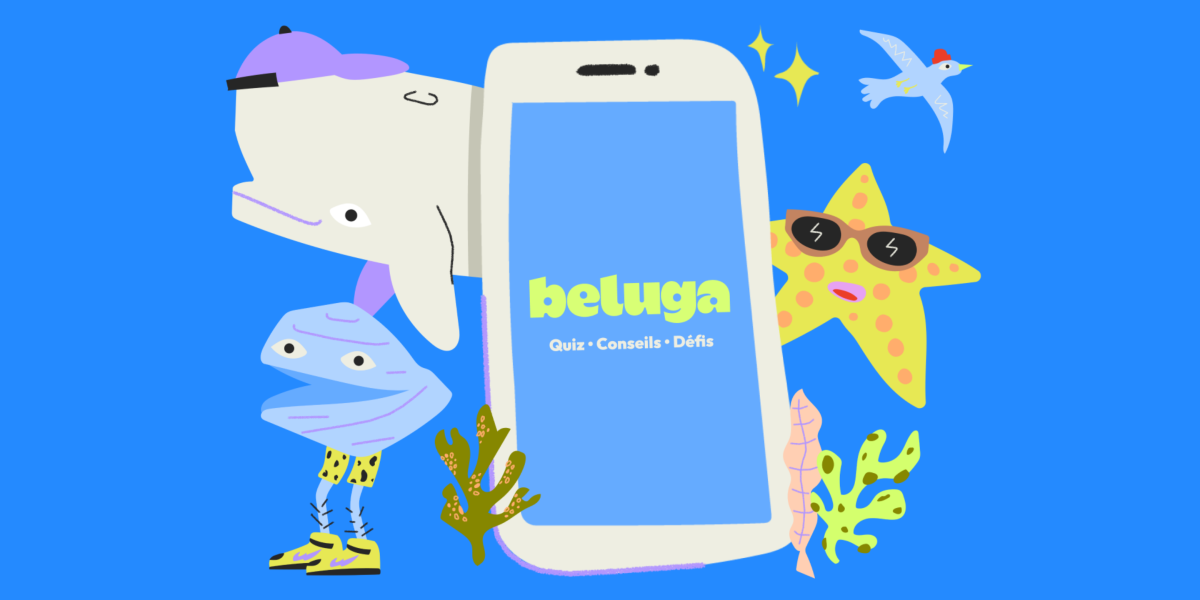

Beluga is a free, bilingual app that helps young people better understand what they are going through. It helps them recognize their strengths and develop their personal and social skills in a fun and interactive way.
A Solution Designed With Young People
In a context where mental health challenges are increasingly present, Beluga takes a preventive, promotional, and co-creation approach to mental health. The vision is clear: act early, make support more accessible, and offer an experience that truly connects with young people aged 14 to 25.
“From the very beginning, the goal was not just to create a digital tool, but to build a solution that is useful, credible, and engaging—designed with and for young people.” Audrey Fortin, Executive Director, Trouve ta ressource
Starting From Young People’s Real-Life Experiences
With the support of Talsom, a youth-centered design approach was first used to better understand young people’s challenges, habits, expectations, and barriers when it comes to well-being, emotions, and seeking help.
To achieve this, the team conducted focus groups, interviews, on-site booths, and activities in school, community, and college settings. In total, more than one hundred young people were engaged to clearly identify their needs.
These discussions revealed a clear reality: many young people experience stress, anxiety, tensions in relationships, and strong academic or social pressure. Yet many still hesitate to seek help, out of fear of being judged, a lack of trust, or simply because they don’t know where to turn.
Evolving the Solution
At first, the project aimed to address the issue through an interactive kiosk in school settings. However, discussions with young people showed that this option did not meet their needs. They wanted a solution that was more discreet, more flexible, and more natural to use in their daily lives.
The project therefore evolved toward the ideation of a mobile app. This choice emerged as a more accessible, more engaging option that better aligned with their habits.
An interactive prototype was developed, tested, and evaluated. From there, the next steps focused on turning insights from the field into concrete solutions. All that remained was to develop the content.
Useful, Practical, and Engaging Content
In practical terms, Beluga offers short, easy-to-use, and motivating experiences: quests, quizzes, tips, and challenges. The idea is simple: give young people practical ways to take action on their well-being, at their own pace and in their own way.
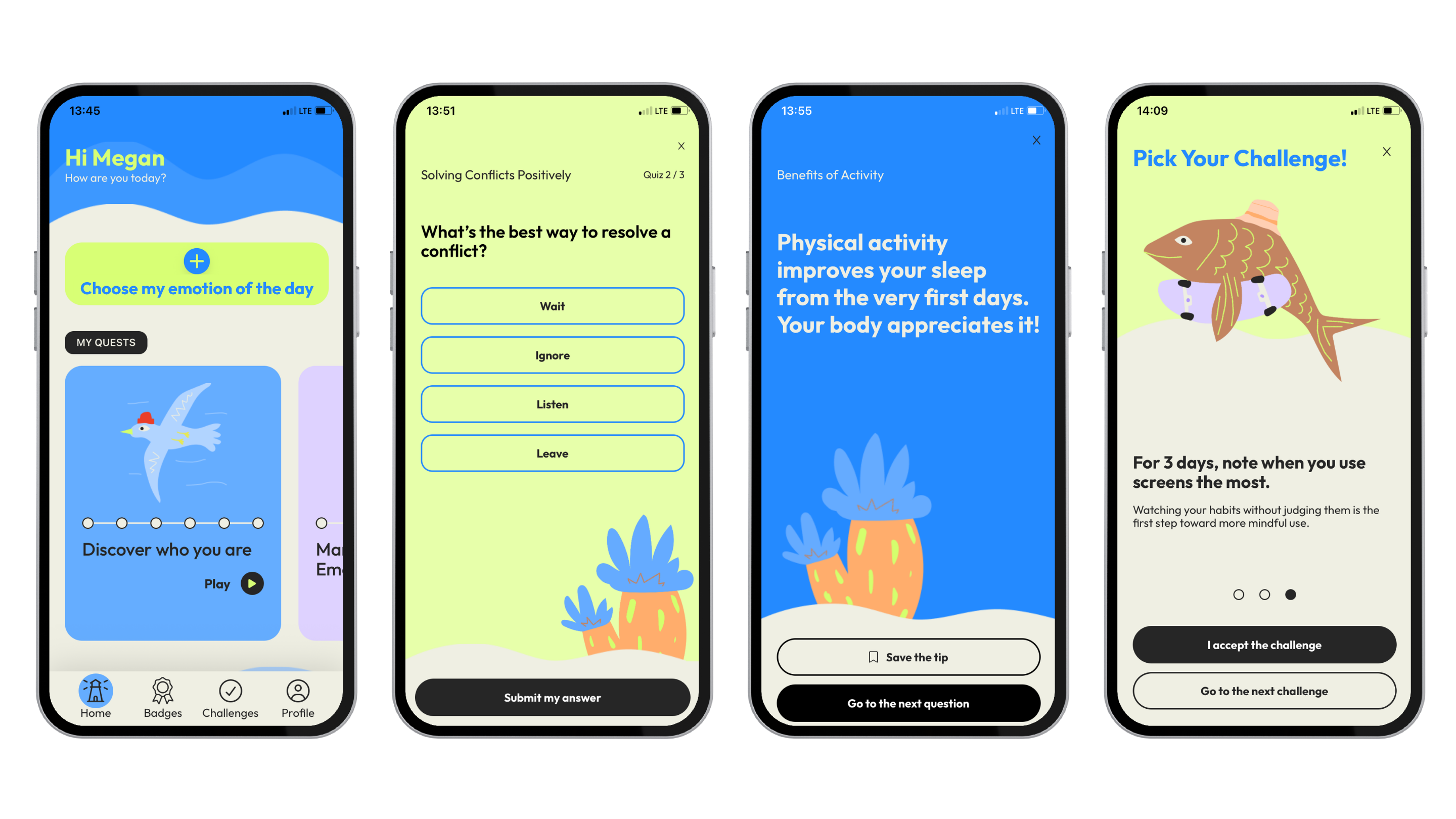
The app’s content was not designed as a simple information library. Instead, it is structured as a progressive journey, with clear goals, chapters, levels of difficulty, skills to develop, and badges to recognize the efforts made.
This approach is based on four core principles:
- Fostering autonomy
- Making progress visible
- Integrating social support
- Encouraging perseverance
The content is primarily based on scientific documentation provided by the public health promotion and prevention advisors from the CISSS de Laval, as well as by the ÉCOBES – Research and Knowledge Transfer team (Cégep de Jonquière).
Building on this foundation, the Trouve ta ressource team developed AI assistants and the logic that guided the generation of content, which was then reviewed by members of the CISSS de Laval’s Jeunes en difficulté team to ensure its relevance, clarity, and alignment with the experiences of young people.
A Progression That Speaks to Young People
The app experience was developed with Nmédia and designed as a guided journey. The content is organized around 5 core quests:
- Getting to know oneself better
- Managing emotions better
- Taking care of relationships
- Adopting healthy lifestyle habits
- Cultivating a positive mindset
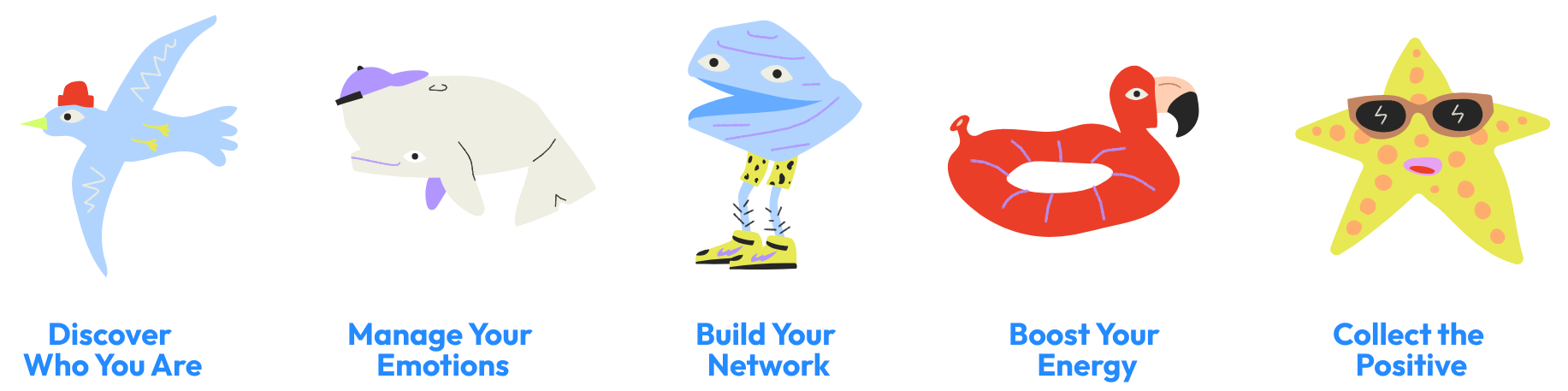
Each pathway offers gradual actions, badges, visual cues, and small wins. These elements make learning more concrete and more motivating.
Over time, young people move from a phase of discovery to concrete actions, and then to real habits in their daily lives. This approach makes efforts visible, values small steps, and turns the app into more than a one-time tool.
Beluga becomes a companion for growth, helping young people better understand themselves, navigate what they are going through, and build confidence.
A Brand Identity That Makes Well-Being More Accessible
To ensure the experience is consistent in both content and form, the app was given a strong identity: Beluga. Its voice is warm, simple, reassuring, and inclusive. It echoes the presence of a caring older sister.
Its visual world is built around a colorful, playful, and contemporary marine environment, inhabited by expressive characters that represent the app’s core goals and everyday emotions.
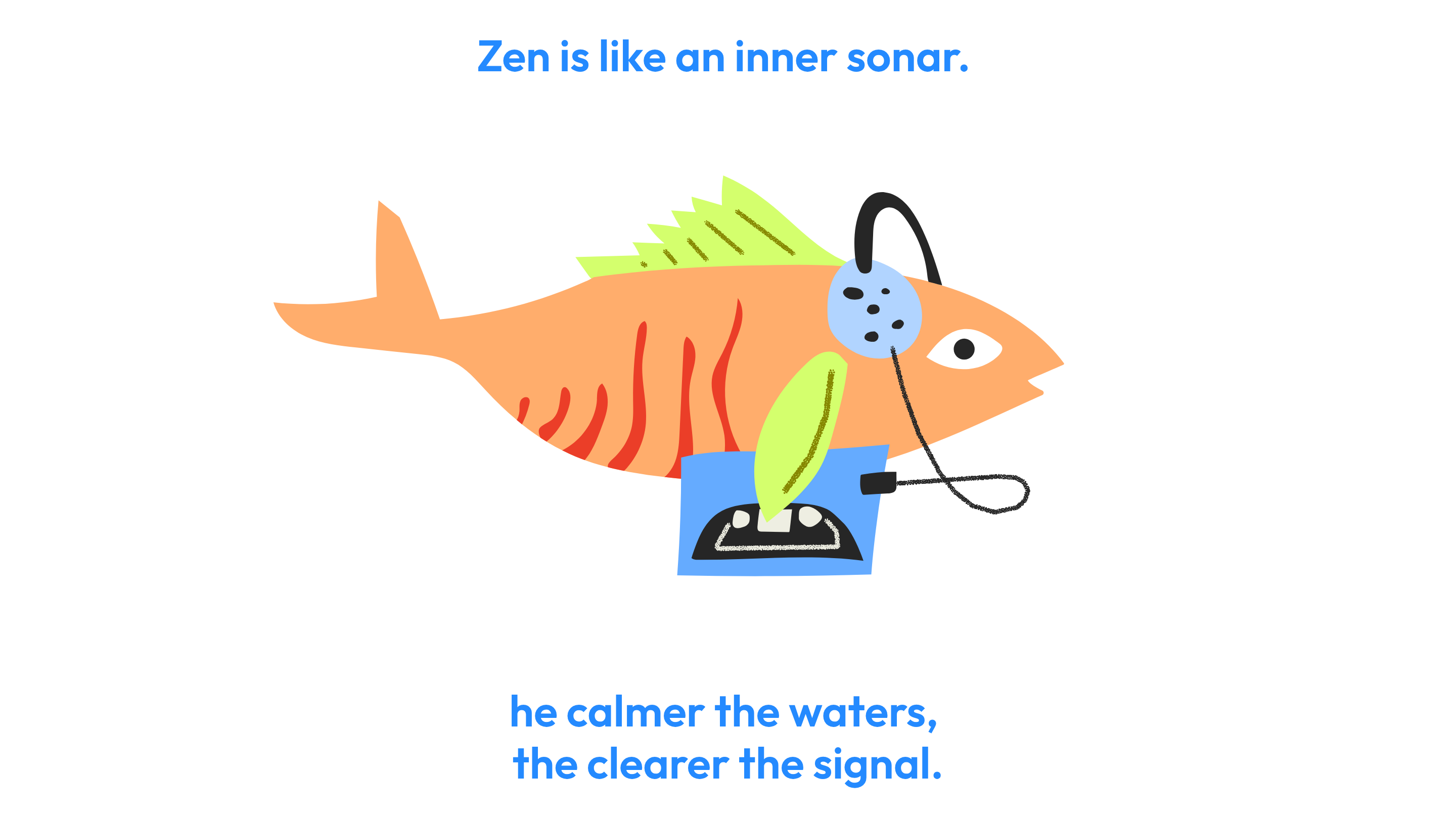
Created by Republik, this universe does more than make the app more appealing. It supports understanding, encourages engagement, and helps users retain content. Most importantly, it creates a reassuring environment that feels closer to young people.
Beluga was designed to make the topic of well-being more accessible, more engaging, and less intimidating, without ever trivializing it.
Collective Expertise in Service of Young People
Beluga is built on collaboration between several complementary areas of expertise.
Trouve ta ressource led the project as a whole by defining its vision, ensuring the consistency of the approach, engaging partners, and developing the methodological framework, content strategy, and AI assistants that made it possible to transform scientific documentation into experiences tailored for young people.
Talsom supported youth consultations, co-creation, prototyping, and testing.
ÉCOBES-Recherche et transfert conducted a participatory evaluative study to document users’ appreciation of the app, guide improvements, and support the transfer of knowledge generated by the project.
The CISSS de Laval teams contributed their expertise to ensure scientific rigor and validate the content.
By bringing together field experience, design, research, clinical expertise, and innovation, the project made it possible to create an app that is both human-centered, rigorous, and grounded in real life.
A Shared Intent, From Start to Finish
Beluga pursues a simple goal: to offer young people a tool that reflects who they are, speaks their language, and helps them take action earlier, more easily, and with greater confidence. Designed with young people, informed by research, and supported by multiple areas of expertise, the app aims to make well-being more concrete, more accessible, and more engaging.
In line with this goal, analyzing usage data and evaluating the impact during the year following the launch will enable the content to be refined, the user experience to be enhanced, and preparations to be made for a larger-scale rollout.
References (in French)
Participatory Evaluative Study - Final Report (in French)
This initiative was made possible through financial support from the Public Health Department of the CISSS de Laval, through its intersectoral action plan for the promotion of positive mental health and the prevention of substance use among young people in Laval, the Ministère de l’Économie, de l’Innovation et de l’Énergie, the Ministère de la Santé et des Services sociaux du Québec, the Secrétariat aux relations avec les Québécois d'expression anglaise and the Ville de Laval through the Place-du-Souvenir Fund.