The Benefits of Creativity on Young People's Self-Esteem

July 28, 2026 Well-being
Parents

When we think of creativity, we often picture the Arts: drawing, music, or writing. Yet creativity is, above all, a way of thinking and imagining solutions. For young people, it plays an important role in their personal, social, and academic development.
Creating to Better Understand Oneself
Adolescence is a time when young people ask themselves many questions: Who am I? What is my place in the world? These questions form the foundation of young people’s identity development. According to several researchers, creativity is linked to this process of identity formation. Both concepts rely on similar processes: exploring ideas, trying out different possibilities, and building something coherent.
When a young person creates freely, they are not just engaging in an artistic activity; they are learning to define themselves beyond their grades or their group of friends.
Adolescence is a key period for the development of creativity. Young people use it to better understand themselves and build their identity.
Creativity and Self-Esteem
This self-confidence also fosters the ability to find multiple solutions to a single problem. By feeling free to explore and experiment without fear of making mistakes, young people develop their creativity while strengthening their intrinsic motivation, that is, the joy of learning and creating for their own sake. This motivation helps them persevere despite difficulties and can help prevent them from dropping out of school.
An Essential Skill for the Future
Creativity is one of the key skills of the 21st century, alongside critical thinking and collaboration. It helps people adapt to new situations, solve problems, and innovate in all areas of life.
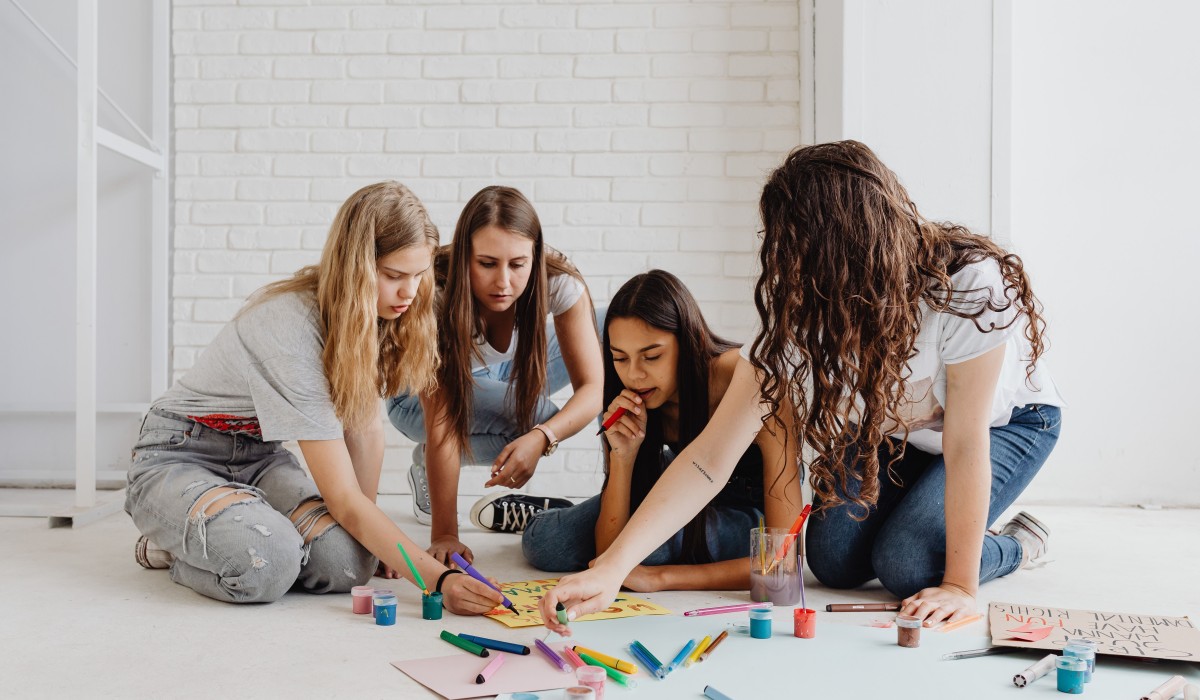
Creative group activities also have an impact on social skills. They help students learn to listen, share ideas, negotiate, and work as a team.
Young people are more creative in an environment that encourages them to explore and make mistakes without fear of judgment.
The Role of the Environment
An environment that fosters creativity values the process more than the result. Here are a few simple ways to support creativity at home:
- Allow for free time without planned activities
- Avoid constantly correcting or directing
- Value attempts, even if they aren’t successful
- Show interest in their creations without judging them
These actions show young people that their ideas matter and that they have the right to explore in their own way.
How can you encourage creativity every day?
Developing creativity doesn’t require expensive materials or special artistic talents. A few simple actions can make a real difference:
- Set challenges, such as making up a story, building an object from recycled materials, or finding multiple solutions to the same problem.
- Encourage young people to try new activities (cooking, photography, music, crafts, gardening, coding, etc.).
- Focus more on the process than the result by highlighting effort, ideas, and perseverance.
- View mistakes as learning opportunities rather than failures.
- Provide screen-free time when young people can explore freely, imagine, and create at their own pace.
- Participate in creative projects as a family or in a group to foster collaboration and the joy of creating together.
These habits help young people develop their confidence, independence, and ability to solve problems in original ways. These skills, which will stay with them throughout their lives, highlight the importance of creativity. Indeed, creativity helps young people grow, understand themselves, and better adapt to the world. It influences identity, self-confidence, motivation, and academic success.
Adults play an important role. By providing an open and supportive environment, they encourage young people to develop their creativity and help them build a more secure and fulfilling future.
References (in French)
Barbot, Structures identitaires et expression créative à l’adolescence
Barbot et Lubart, Adolescence, créativité et transformation de soi
Lubart, Psychologie de la créativité
Robinson, Creative Schools
OCDE, Développer la créativité et l’esprit critique des élèves
CTREQ, La créativité : clé de la réussite éducative des jeunes